Peace in the Mideast is about faith, not just politics
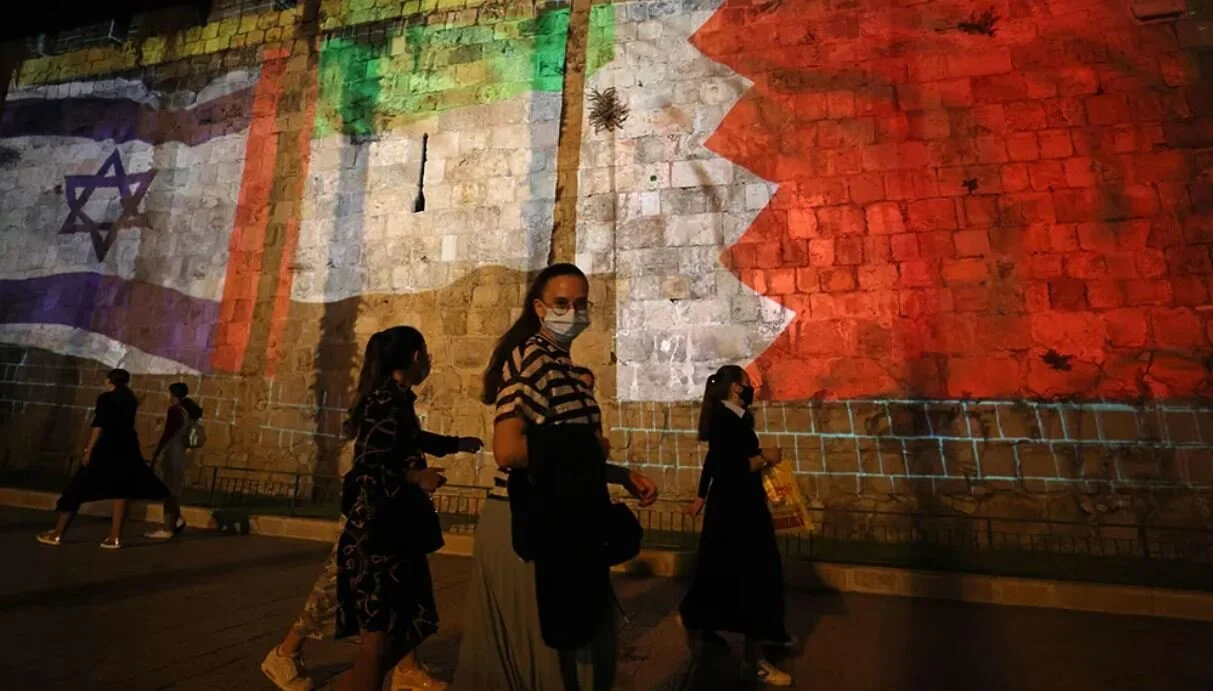
National Post, 09 October 2020
The Abraham Accords attempt to make religion a factor of common heritage instead of division.
Recently in these pages, former prime minister Stephen Harper and Shuvaloy Majumdar praised the recent Abraham Accords as “truly transformative.” The agreement to normalize relations between Israel and the United Arab Emirates and Bahrain, brokered by the Trump administration, prepares the ground for “historic realignments” in the region.
There is more to be said. While the diplomatic triumph of the Abraham Accords is of great geopolitical importance in a conflicted region, they also constitute a breakthrough of religious significance.
Begin with the name. They are not known by the place of negotiation — Camp David, Oslo — but by a religious reference to Abraham, the common father of Jews and Muslims, the pilgrim who went from Ur of the Chaldees (Iraq) to the promised land of Israel. Abraham, the father of Ishmael and Isaac, holds immense importance for Christians, too, honoured in sacred worship as “our father in faith.” (Oct. 9 is his liturgical feast day in the Catholic Church, for those who delight in such trivia — and who doesn’t?)
We marked last month the 50th anniversary of the death of Gamal Abdel Nasser, the leader of Egypt and a nascent pan-Arab, secular movement — an alliance against Israel to be sure, but also against Islam as a dominant force in shaping the modern Arab state. His spectacular defeat in the Six Day War was a catastrophe for secular Arab nationalism. It never recovered; meanwhile Islamist movements began to rise, both in Saudi Arabia and in Iran.
Thence began a long shift of the Arab-Israeli conflict from the ground of national identities to religion. For example, the first intifada of 1987 was a national uprising; the second intifada of 2000 was more explicitly religious, a conflict animated by Islamist ideas rather than purely national ones.
This had deleterious effects on the Palestinian strategy, which shifted from claims to a national homeland to a religious claim to the land. Because the more obvious biblical claim to the land is that of the Jews — present in the land of Israel from Abraham’s arrival to David establishing his capital in Jerusalem — this new Palestinian approach required denying Jewish claims. Indeed, for nearly 20 years it has been a feature of both Palestinian propaganda and educational curricula that the Jews were never in Jerusalem or even Israel.
Continue reading at the National Post.